
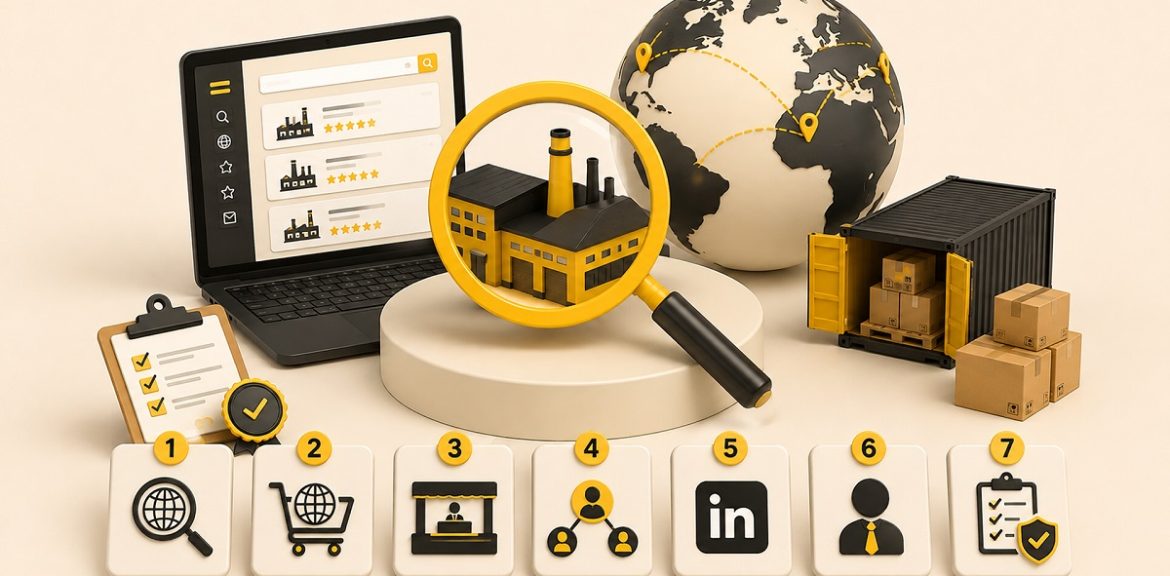

Entering the international market starts with finding a reliable manufacturing partner. The question of how to find a manufacturer becomes critical for companies planning to import goods. A mistake at this stage costs money, time, and business reputation. This article covers seven proven search channels and the criteria for selecting a partner. The Daleth Group team supports clients in sourcing suppliers and manufacturers for importing goods in any market.
Why Choosing a Reliable Manufacturer Is Critically Important
The stability of supplies, on-time delivery, and compliance of goods with standards all depend on the quality of the manufacturer. The question of how to find a reliable manufacturer is relevant for companies of any size. An incorrect choice of partner leads to defective products, missed contract deadlines, and financial losses. The right approach to sourcing saves resources at later stages of cooperation.
How to Tell a Manufacturer Apart from a Trading Company
Not every company offering a product is its direct manufacturer. A significant share of suppliers on international marketplaces operate as trading companies or intermediaries. This is not always a drawback, but working directly with the factory usually provides better quality control, more stable prices, and greater manufacturing flexibility.
Before starting cooperation, it is worth clarifying:
- whether the company has its own production facilities;
- whether a production audit can be arranged;
- whether products are made under the company’s own brand or on an OEM/ODM basis;
- whether it is possible to get photos, videos, or an online tour of the production facility.
Channel 1: Online Marketplaces (Alibaba, Made-in-China, and Others)
An online marketplace lets you quickly find dozens of potential suppliers by product category. Platforms display a company’s rating, order history, and buyer reviews. However, some profiles belong to intermediaries rather than actual factories. The question of where to find a manufacturer through such services is addressed through verified-supplier filters, Gold Supplier status, and licence checks.
Channel 2: Industry Trade Shows and Fairs
Trade shows allow you to personally inspect product samples and speak with factory representatives. This is one of the most reliable ways to find a manufacturer with real production, rather than an intermediary company. At a trade show, it is easy to compare several factories at once and negotiate terms face to face.
Channel 3: Industry Directories and Business Catalogues
Specialised directories contain verified manufacturer contacts by industry. Such resources often require confirmation of a company’s registration documents before publishing a profile. This raises the level of trust compared with open, unmoderated online marketplaces.
Channel 4: Recommendations and Professional Communities
Recommendations from industry peers are one of the most accurate sources of information about a manufacturer’s reliability. Professional communities and importer forums provide real feedback on product quality, adherence to deadlines, and a supplier’s behaviour after payment.
Channel 5: Sourcing Agents and Buyers
A sourcing agent has a local network of contacts and experience vetting factories. They handle the production audit, sample control, and deal support. This is particularly useful for companies with no experience in a specific market or no knowledge of the supplier’s language.
Channel 6: Chambers of Commerce and Government Agencies
Chambers of commerce maintain registers of verified manufacturers and provide official information about a company’s reputation. Government export-support agencies also publish lists of manufacturers that have passed a preliminary check of documents and quality certificates.
Channel 7: Search Engines and Social Media
Direct searches on Google and social media let you find factories’ official websites and contact them directly, without intermediaries. It is worth checking the website’s domain, the company’s registration date, and the presence of real contact details rather than just a contact form.
| Search Channel | Speed | Verification Level | Cost |
| Online marketplaces | High | Medium | Free |
| Trade shows | Medium | High | Travel expenses |
| Sourcing agent | High | High | 3-10% commission |
| Chambers of commerce | Low | High | Often free |
| Search engines | Medium | Low | Free |
How to Vet a Manufacturer Before Cooperation
Request a business licence and product compliance certificates. Before signing a foreign trade agreement (contract), it is recommended to carry out comprehensive manufacturer due diligence, request incorporation documents, confirmation of company registration, product compliance certificates, and to test product samples. This approach helps minimise commercial and legal risks during further cooperation. Conduct a video walkthrough of the production facility or hire a local inspector to carry out an audit. It is advisable to check the manufacturer’s legal status through the government or commercial registers of the country of registration, identify the ultimate beneficial owners, and check for litigation, bankruptcy proceedings, sanctions restrictions, and export controls. Such checks are standard practice in international compliance.
“The most common mistake newcomers to procurement make is trusting an attractive online marketplace profile without verifying the actual production facility. We always recommend that clients order an independent factory audit before the first large order,” comments Maryna Ponomarenko, representative of Daleth Group.
Common Mistakes When Searching for a Manufacturer Abroad
Companies often skip the document-verification stage, trusting the visual appearance of a website or profile. The second mistake is full prepayment without any guarantee of a refund. One of the most common mistakes is signing a foreign trade agreement without detailed terms on product specifications, the acceptance procedure for goods, the parties’ liability, warranties, applicable law, and a dispute-resolution mechanism. These are precisely the provisions that most often become the subject of disputes in international trade. The question of how to find a manufacturer abroad without risk is resolved by combining several channels at once.
Conclusion
A reliable manufacturer is found at the intersection of several sources: online platforms, trade shows, recommendations, and professional verification. The question of where to search for manufacturers effectively depends on the industry and the volume of the purchase. Once a partner has been found and verified, the next step is organising the shipment: Daleth Group takes on customs brokerage services and logistics support for the cargo from the factory to the client’s warehouse. You can learn more about the company on the Daleth Group website.
FAQ
Where should I look for a reliable manufacturer abroad?
It is most effective to combine online marketplaces, industry trade shows, partner recommendations, and verification through chambers of commerce.
How do I vet a factory before signing a deal?
Request a business licence and quality certificates, order product samples, and conduct a video walkthrough or an independent production audit.
Is it safe to order production through Alibaba?
It is safe provided you verify the supplier’s status and order history and use protected payment methods with a refund guarantee.
Why order samples before a large batch?
Samples let you assess the actual quality of the product and its compliance with specifications before paying for a large order.
How do I recognise an intermediary posing as a manufacturer?
Ask for photos of the actual production facility and the business licence number, and compare the company’s address with the country’s official registers.