
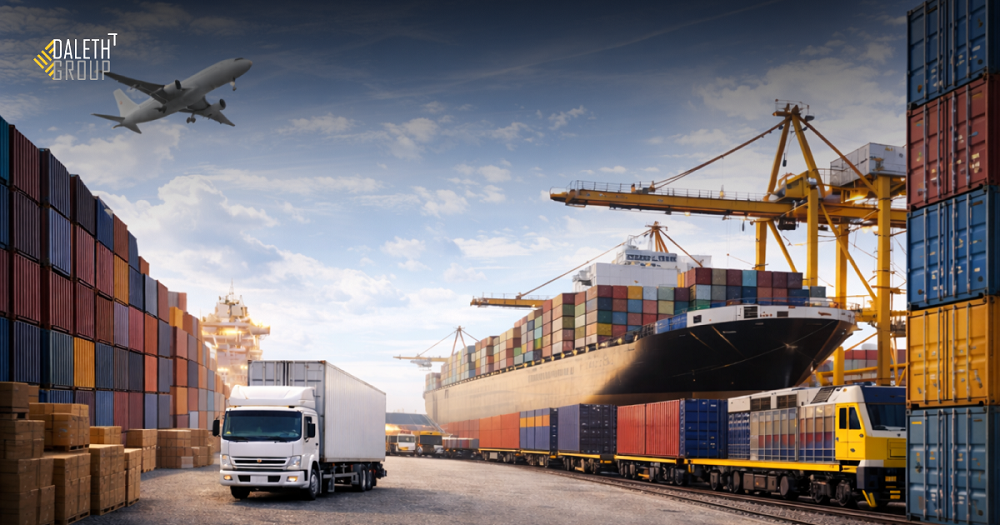
In the B2B segment, logistics is not just about transporting cargo. It involves managing risks, cash flows, contractual obligations, and the company’s reputation. This is especially relevant for businesses that use multimodal transportation, where several types of transport are combined: road, sea, air, or rail.
Choosing the wrong company for multimodal transportation may lead to transit delays, additional warehouse or customs costs, certification issues, and financial losses due to documentation errors. That is why selecting a logistics partner is a strategic decision that affects the stability of the entire business.
What Is Multimodal Transportation and Its Role in B2B Logistics
Multimodal transportation is the organization of cargo delivery using two or more modes of transport under a single contract and under the responsibility of one operator.
For example, cargo may be delivered by sea in a container, then transported by rail to an inland terminal, and finally delivered by truck to the client’s warehouse. All stages are coordinated by one logistics company for multimodal transportation, which is responsible for routing, consolidation, contracting carriers, customs support, and transit control.
According to the experience of Daleth Group, a well-structured multimodal scheme allows businesses to combine speed, cost efficiency, and risk control. However, such a model requires careful planning at every stage.
Key Criteria for Choosing a Logistics Partner
Experience and Expertise in International Transportation
A professional logistics partner must have practical experience in export, import, and transit operations. It is important that the company understands the specifics of customs clearance and works with T1 declarations, guarantee documents, non-tariff controls, and various customs regimes.
A competent freight forwarder does more than just transport cargo – they analyze risks even before transportation begins. Most management decisions that affect the final cost and delivery time are made during the planning stage.
Geographic Coverage and Partner Network
A reliable logistics company for multimodal transportation should have a wide partner network in key regions. This allows the company to flexibly adjust routes, optimize tariffs, and quickly respond to changes in transit flows.
The presence of partners in ports, terminals, customs zones, and consolidation warehouses increases reliability and predictability. The broader the coverage, the lower the dependency on a single route or carrier.
Should a Logistics Operator Have Its Own Transport?
Having its own transport can be an additional advantage, but it is not the key factor. What matters more is process management, the quality of carrier contracting, and the ability to ensure continuous transport control.
A professional logistics partner for multimodal transportation should have access to various transport resources: FTL and LTL trucking fleets, container equipment, air cargo slots, and rail services. The most important factor is responsibility for the entire supply chain.
Infrastructure and Digital Solutions
Modern logistics is impossible without digitalization. Real-time cargo tracking, electronic document management, automated order processing, and transparent invoicing systems demonstrate the maturity of a logistics operator.
The availability of warehouse infrastructure allows for consolidation, containerization, and temporary cargo storage. This is especially important for businesses with regular import and export flows.
Customs Support and Documentation
Customs procedures are one of the most sensitive points in international logistics. It is important that a logistics company for multimodal transportation has experienced customs brokers and provides full support.
This includes document verification, calculation of customs duties, submission of declarations, assistance during customs inspections, and compliance with non-tariff controls.
Daleth Group experts note that most border delays occur due to incorrectly prepared documentation. Therefore, a preliminary audit of the document package before transit begins is an essential step in professional logistics.
Documents That Confirm Reliability
Before signing a contract, it is advisable to verify the company’s registration documents, licenses, NCTS authorizations, ISO certificates, and liability insurance.
The presence of financial guarantees indicates that the company is capable of taking responsibility in case of unforeseen situations. Transparency in providing documentation is an important indicator of reliability.
Transparency of Pricing
A professional multimodal logistics company always explains the structure of its pricing. The client should understand what the freight cost includes, which terminal charges are considered, and which customs payments are included or billed separately.
Based on Daleth Group’s experience, detailed commercial offers help avoid unexpected expenses during transit. Clear pricing is the foundation of long-term partnership.
Reputation and Case Studies
Experience is confirmed by practice. It is important to review case studies, complex projects, non-standard routes, and examples of cost optimization.
A company that acts as a strategic partner demonstrates readiness to take responsibility for the final result, not only for a specific stage of transportation.
Step-by-Step Selection Process
Start by defining your own needs: geography, cargo type, shipment volumes, and delivery frequency. Then create a list of potential partners and request commercial proposals.
After that, verify the documents, arrange a meeting to evaluate the team’s competence, and test cooperation through a pilot shipment. This practical stage best demonstrates the quality of service and the ability to respond to unexpected situations.
Common Mistakes When Choosing a Partner
The most common mistake is focusing only on the lowest price. This often leads to additional expenses due to delays, penalties, or incorrect routing.
Businesses sometimes also underestimate the importance of customs expertise, fail to verify insurance coverage, or neglect to clearly define contractual terms. As a result, some risks remain on the client’s side.
Conclusions and Recommendations
Choosing a logistics partner for multimodal transportation is a decision that directly affects the financial stability of the company, the speed of goods turnover, and competitiveness in the international market.
A reliable logistics company for multimodal transportation ensures cost optimization, transit control, efficient routing, and risk minimization. A comprehensive approach and a partnership-based cooperation model allow businesses to scale without logistical disruptions.
FAQ
What criteria are key when choosing a logistics partner?
Experience in international transportation, customs expertise, financial stability, transparent pricing, and a wide partner network.
Should a logistics operator have its own transport?
Not necessarily. What matters more is process control, a reliable carrier network, and guaranteed fulfillment of obligations.
Which documents confirm the reliability of a logistics company?
Licenses, certificates, authorizations, liability insurance, and financial guarantees.
How can you verify a company’s experience in international transportation?
Request case studies, evaluate the quality of consultation, and check the company’s experience with different customs regimes.
If your business operates in the international market, choose not just a carrier but a strategic logistics partner for multimodal transportation who can ensure full process control – from the warehouse to final distribution.