
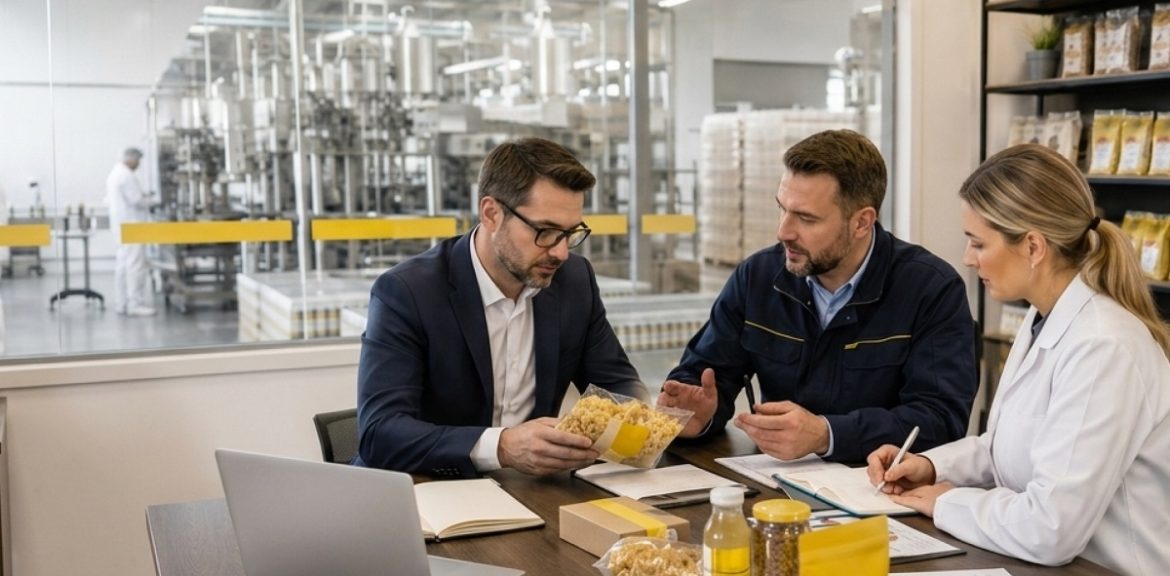
Expanding an assortment or launching a private label always starts with the same decision: choosing a manufacturer you can trust. The question of how to find a reliable manufacturer seems simple until it comes to real negotiations and signing documents. A mistake at this stage is costly: disrupted deliveries, defective stock on shelves, and lost customer trust. In this article, we’ll cover seven questions to ask a manufacturer before the first contract and show how they connect to each other.
Why choosing a manufacturer is critical for retail business
The manufacturer shapes everything: product quality, delivery timelines, and the financial stability of the entire supply chain. If a partner misses deadlines or ships defective goods, it’s the store, not the factory, that bears responsibility to the customer. That’s why the question of how to find a supplier for a store should be treated as a system of checks, not a search for the lowest price. Below, these checks follow a logical order: first we assess the manufacturer’s capabilities, then documents, then cooperation terms, and finally reputation and quality.
Question 1: what is the manufacturer’s production capacity and workload
The first thing to find out is whether the factory can physically fulfill your order. A manufacturer with limited capacity may fail to handle peak-season volume, even if it verbally promises to meet deadlines. Ask about the number of shifts, equipment, and average monthly output, then compare those figures with your real purchasing forecasts. If you’re looking for a partner specifically to produce goods to your own specifications rather than an off-the-shelf product line, this is the point where it’s worth clarifying how to find a manufacturer for custom-made goods: a capacity check will show whether the factory can handle individual production without delaying its other clients.
Question 2: what quality certificates and permits does the manufacturer have
Once capacity is confirmed, the next step is checking the documents that prove the legality and quality of production. These include compliance certificates, sanitary service permits, and, for certain product categories, international standards such as ISO. The absence of basic documents is already a red flag worth clarifying directly. So, what documents should you request from a manufacturer before signing a contract:
- product compliance certificate;
- sanitary and technical control permits;
- certificate of origin for customs clearance;
- licenses, if the product is subject to mandatory licensing.
Depending on the type of product, the requirement for certificates, declarations of conformity, licenses, and other permits is governed by Ukrainian legislation on technical regulations and conformity assessment, licensing legislation for business activities, and specific regulations for individual product categories.
Question 3: what is the minimum order quantity (MOQ)
After checking the documents, it’s logical to move to the terms of the first order, and here the key metric is the minimum order quantity (MOQ). For a small chain, an inflated MOQ means capital frozen in slow-moving stock. Find out whether a flexible approach to first batches is possible and whether the MOQ decreases for repeat orders. This is especially important when it comes to how to choose a manufacturer for a private label: small test batches let you assess product quality before investing in a large volume.
Question 4: what are the production and delivery timelines
Order volume is directly tied to timelines, so the next question logically follows from the previous one. Clarify the full cycle, from payment to shipment of the finished batch, and how the manufacturer accounts for seasonal load and possible force majeure. If the product is supplied from abroad, it’s worth planning the logistics route in advance: International logistics helps shorten delivery times and avoid delays at the border.
Question 5: what are the payment terms and financial guarantees
Once timelines are agreed, the remaining issue is the financial risk of the first deal. A partial prepayment with final settlement after goods acceptance is considered the safer option. The legal relationship between manufacturer and buyer, including delivery terms, liability of the parties, and contract performance, is governed by Ukraine’s civil and commercial legislation. Here are the payment terms that are safe for a first order:
- 30-50% prepayment with final payment after quality inspection;
- payment via letter of credit for large international contracts;
- deferred payment only after several successful deliveries;
- terms fixed in the contract with clear penalty clauses.
For import deliveries, it’s worth clarifying customs procedures in advance. The procedure for customs clearance of goods, the list of required documents, and customs control procedures are defined by the Customs Code of Ukraine. Qualified customs brokerage services help ensure documents are filed correctly and avoid extra costs at the border.
Question 6: does the manufacturer have experience working with retail chains
With documents and payment terms checked, it’s time to look at the manufacturer’s experience specifically with retail. Working with retail chains shows whether the factory understands the specifics of packaging, labeling, and batch consistency in deliveries. Ask for contacts of clients the manufacturer has already worked with, this lets you assess reputation before signing the deal. This is essentially how the question of how to verify a manufacturer’s reputation gets answered in practice: through feedback from real partners of a similar scale.
Question 7: how does the manufacturer handle claims and quality control
The final check is how the factory behaves in non-standard situations. No manufacturer is immune to defects, so it’s important to agree on a claims procedure in advance: timeframes for reviewing complaints, and the process for replacement or refund on a defective batch. What to look for during a production audit:
- storage conditions for raw materials and finished goods;
- compliance with sanitary standards on the production line;
- an incoming and outgoing quality control system;
- a dedicated department for handling claims.
Checklist before signing your first contract
Once all seven questions have been covered, it’s time to compile the answers into one document and cross-check them against the manufacturer’s actual paperwork. This approach matters when you’re looking for how to find a manufacturer in Ukraine for long-term cooperation, not a one-off deal. The checklist includes: verified certificates, confirmed delivery timelines, transparent payment terms, and contact details for emergencies. It’s also worth assessing the manufacturer’s reputation before long-term cooperation through partner reviews, company history, and financial stability.
According to a Daleth Group expert: “Retailers most often lose money not because of the product price, but because of a failure to check documents and financial terms at the start of cooperation. A single production audit before signing a contract saves far more than the check itself costs.”
Conclusion
A reliable manufacturer is a partner who meets deadlines, backs up quality with documents, and openly discusses cooperation terms. The seven questions in this article logically move from assessing capacity to checking reputation, helping retailers minimize the risks of a first contract. But vetting a manufacturer is only part of the journey: retailers often lack the resources to find a reliable partner on their own, calculate cost of production, or build a working business model for a new product line. The Daleth Group team handles this entire process end to end: selecting a manufacturer to your requirements, calculating cost of production, developing a business model, financing and delivering shipments, and supporting import and export operations, from logistics to customs clearance. All these services are available under one roof, so reach out for a consultation before entering an agreement with a new partner.
FAQ
What documents should you request from a manufacturer before signing a contract?
The minimum package includes a product compliance certificate, sanitary permits, and a certificate of origin for subsequent customs clearance.
How do you check a manufacturer’s production capacity?
Request data on equipment, number of shifts, and average monthly output, and, if possible, arrange an on-site production audit.
What should you look for during a production audit?
Key points: raw material storage conditions, compliance with sanitary standards, and a quality control system at every stage.
What payment terms are safe for a first order?
The optimal option is a 30-50% partial prepayment with final settlement after the batch is accepted.
How do you assess a manufacturer’s reputation before long-term cooperation?
Check previous clients’ reviews, the company’s market history, and its experience working with retail chains of your scale.